Buying a Yoga Mat? Here's What You Need to Consider!
By now, there are so many different types of yoga mats available that it's easy to get overwhelmed by the choices. With so much to choose from, how do you know which mat to pick? To help you with this decision, we've outlined below the aspects to consider when buying a yoga mat.
Thickness
Unfortunately, there's no one-size-fits-all thickness for a yoga mat as it varies from person to person. The thickness of an average yoga mat ranges from 1mm to 5mm and is often used by experienced yogis. A 6mm yoga mat is considered on the thicker side, providing more cushioning. However, with a thick yoga mat, performing standing poses may be a bit more challenging as there's less contact with the floor.
A thick yoga mat is especially recommended for individuals who are prone to joint pain. The soft surface of the mat helps reduce the risk of pain in areas such as the knees, ankles, and back. A thick mat is particularly suitable for gentle yoga styles that involve mostly floor exercises. Suitable forms of yoga include Yin Yoga, Pilates, Iyengar Yoga, Bikram Yoga, Restorative Yoga, Hatha Yoga, and Ashtanga Yoga. If you're looking for an even thicker mat, you might consider using our
fitness mat instead.
Length
Most yoga mats have a length between 1.70 - 1.85 meters. Of course, longer and shorter mats are also available. Since a large portion of yoga exercises are done lying down, it's essential to consider your own body length when purchasing a new yoga mat. The width can also be taken into account. A standard width for many yoga mats is 60cm. However, if you have broad hips and shoulders, opting for a wider yoga mat might be a better choice for a comfortable fit. Exercises where you lie stretched out on the mat will require your arms to be positioned differently on the ground. If this isn't an issue for you, a 60cm wide mat should suffice.
Pattern
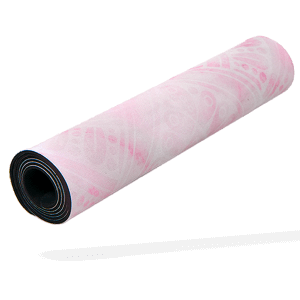
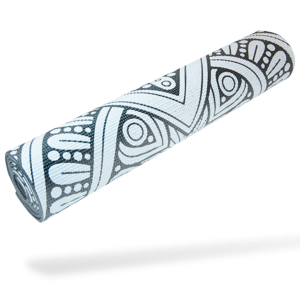
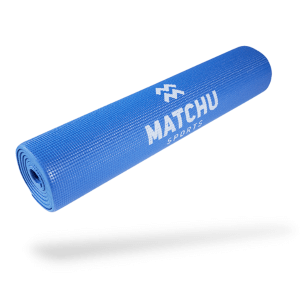
The pattern you choose for your mat is a personal preference. Depending on your taste, you can opt for a simple mat or one with more color. If you're looking for a serene, affordable yoga mat, you can choose our blue yoga mat. If you prefer a mat with a pattern or more color, you might consider our yoga mat ART. This mat features a mandala print in white and black, making it a real eye-catcher! The Yoga mat DeLuxe features a calm pink mandala print. Pink is a soft shade of red and is often perceived as calming. The color relaxes and soothes, ideal for achieving complete relaxation during yoga exercises.
Material
The material of the mat plays a crucial role as it affects durability, comfort, cushioning, texture, and grip. Materials commonly used for yoga mats include PVC, TPE, natural rubber, cork, and cotton. Each material has its own pros and cons.
PVC
Most mats are made of PVC. These are also known as sticky yoga mats because they offer good grip and are very non-slip. Using a PVC mat helps prevent slipping during yoga exercises. A significant advantage of a PVC yoga mat is that it's easy to clean and can sometimes even be washed in the machine. However, a drawback of a PVC mat is that it loses some of its stickiness when moist. So, sweating may cause the mat to lose grip. To counter this, you can place a
yoga towel on top of the PVC mat. In general, you can use a PVC mat for any style of yoga.
TPE
Many yoga studios also use TPE mats. TPE (Thermo Plastic Elastomer) yoga mats, like natural rubber mats, are environmentally friendly. These rubber mats are biodegradable and free from harmful substances. Compared to a PVC mat, a TPE mat has a high-density structure. A TPE mat is soft, elastic, and has a very non-slip surface, preventing your hands and feet from slipping. Additionally, TPE is suitable for individuals with a latex rubber allergy since it has a neutral odor. A TPE mat can be used for all styles of yoga, such as Hot Yoga, Vinyasa Flow Yoga, and Power Yoga.
Natural Rubber
Natural rubber mats have a slightly longer lifespan than TPE mats. However, these mats wear out faster with intensive yoga practices. Factors such as sunlight, moisture, and heat also play a significant role in their durability. These mats can be used as outdoor yoga mats, as long as you don't leave them in direct sunlight for too long to prevent the rubber from drying out. This also applies to a TPE yoga mat. A natural rubber yoga mat is suitable for yoga styles such as Hatha Yoga, Power Yoga, Ashtanga Yoga, and Iyengar Yoga.
Cork
Another material used for making yoga mats is cork. The
Cork Yoga Mat from Matchu Sports, like the
DeLuxe Yoga Mat, is made from eco-friendly material, making them sustainable yoga mats. The DeLuxe Yoga Mat features an anti-slip function that keeps the mat in place. The suede top provides a premium feel and a luxurious look. Cleaning the yoga mat is easy with a damp cloth or a suede brush. To maintain the mat's quality, it's advisable to impregnate the top layer with a water- and dirt-repellent agent. This will help you enjoy your mat for a longer period!
Grip
Many yoga studios also use TPE mats. TPE (Thermo Plastic Elastomer) yoga mats, like natural rubber mats, are environmentally friendly. These rubber mats are biodegradable and free from harmful substances. Compared to a PVC mat, a TPE mat has a high-density structure. A TPE mat is soft, elastic, and has a very non-slip surface, preventing your hands and feet from slipping. Additionally, TPE is suitable for individuals with a latex rubber allergy, thanks to its neutral odor. A TPE mat can be used for all styles of yoga, such as Hot Yoga, Vinyasa Flow Yoga, and Power Yoga.
Maintaining Yoga Mats
Maintaining your yoga mat is essential for both durability and hygiene. During yoga exercises, your mat comes into contact with sweat, oils from your skin, and floor dust. Over time, this can lead to wear and tear or the accumulation of bacteria.
Regularly clean your yoga mat, preferably after each session, to keep it in top condition. You can use special yoga mat cleaners or create a natural solution with water and essential oils. It's important to let your mat fully dry after cleaning to prevent mold formation.
For TPE yoga mats, a popular type due to their eco-friendly and non-toxic properties, it's also possible to clean them in the washing machine.
In addition to regular cleaning, how you store your yoga mat is also important. Roll up your mat after use and store it in a cool, dry space to extend its lifespan and maintain its quality.
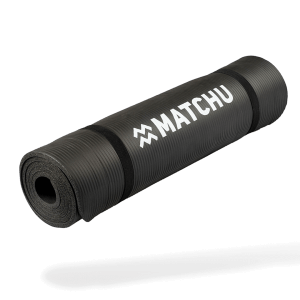 R495.00
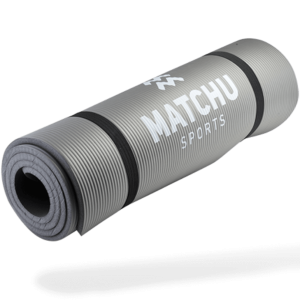 R455.00
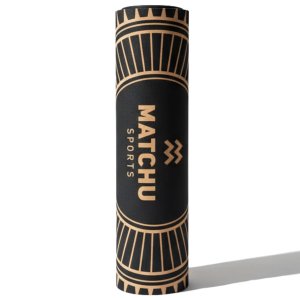 R395.00
 R1,195.00
 R480.00
 R325.00